LETPass / Own product
From more practice to a clearer study journey.
My review platform for aspiring teachers. Built to help a learner choose a focus, understand a mistake, and return to a useful next session.
“What should I study next?” deserves a useful answer.
Preparing for the Philippine Licensure Examination for Teachers involves more than finding questions. Learners need to recognise gaps, understand why an answer was wrong, and fit the next study session around the time they have.
I founded LETPass to bring that work into one experience. The product connects mock exams, targeted practice, explanations, study planning, and Gabby, an AI study coach. My responsibility spans the product decisions, interface, implementation, and ongoing operation.
Each screen should help the learner make the next useful decision.
Inside the study journey
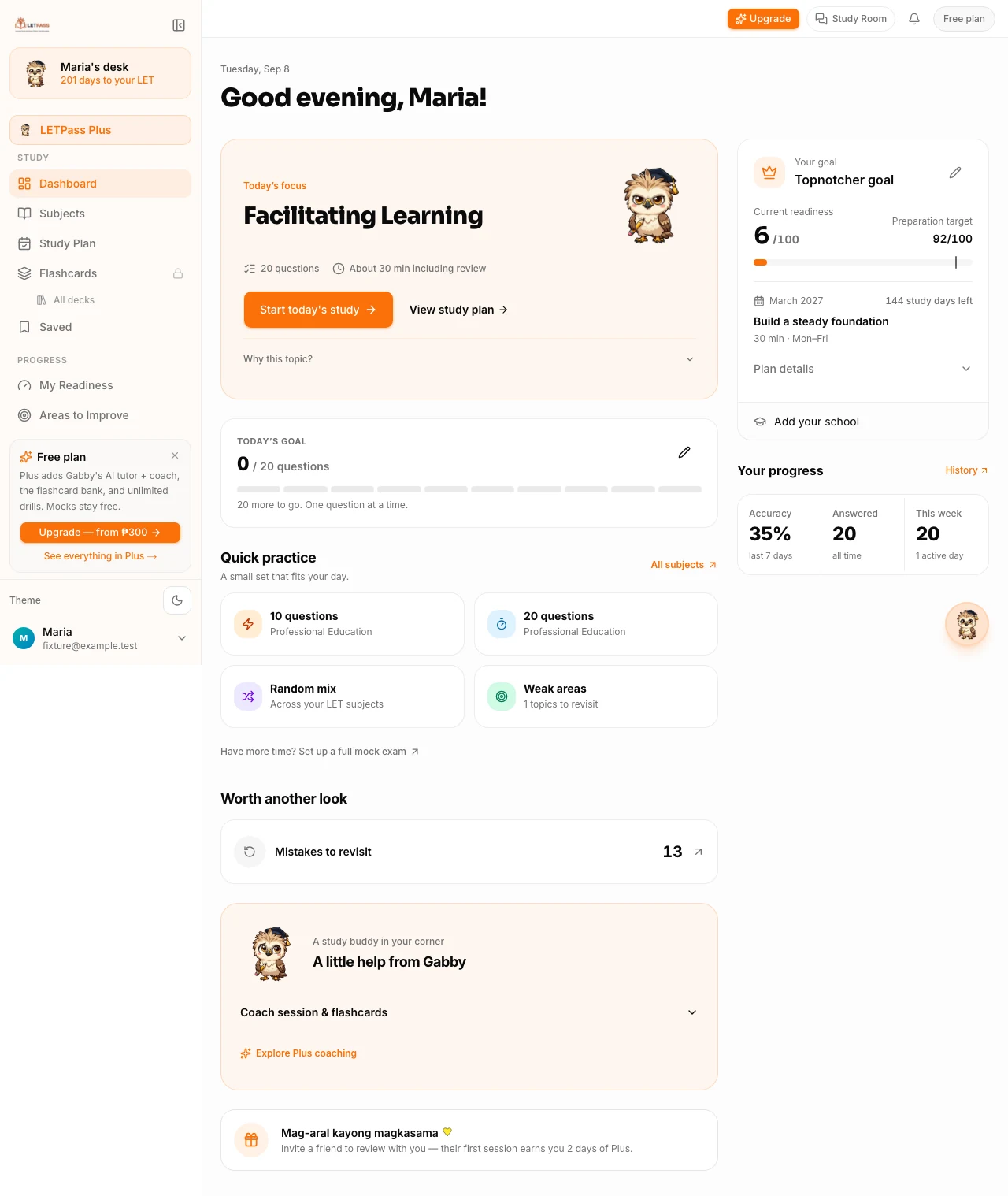
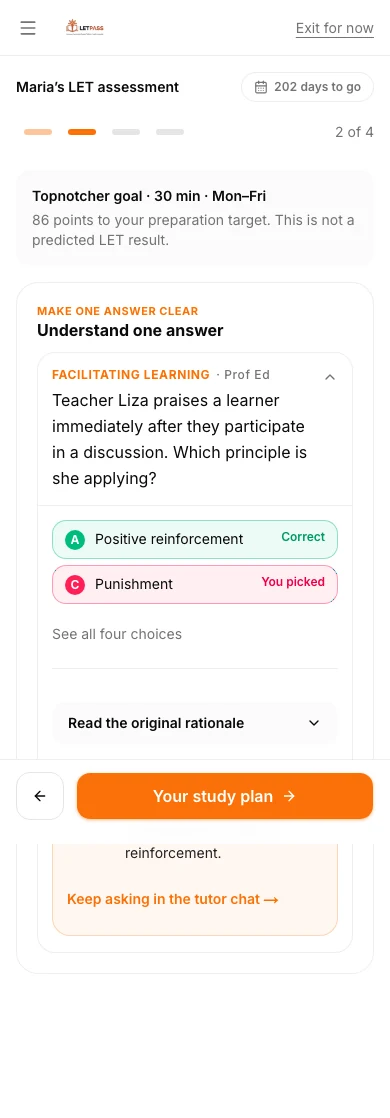
A focus for today. A reason to come back.
The latest work brings the dashboard, answer review, and study plan closer together. Explore the real screens and the decisions behind them.

September 2026 application captures using a fictional learner. Progress and preparation targets describe that sample session, not a predicted LET result.
From a result to a routine
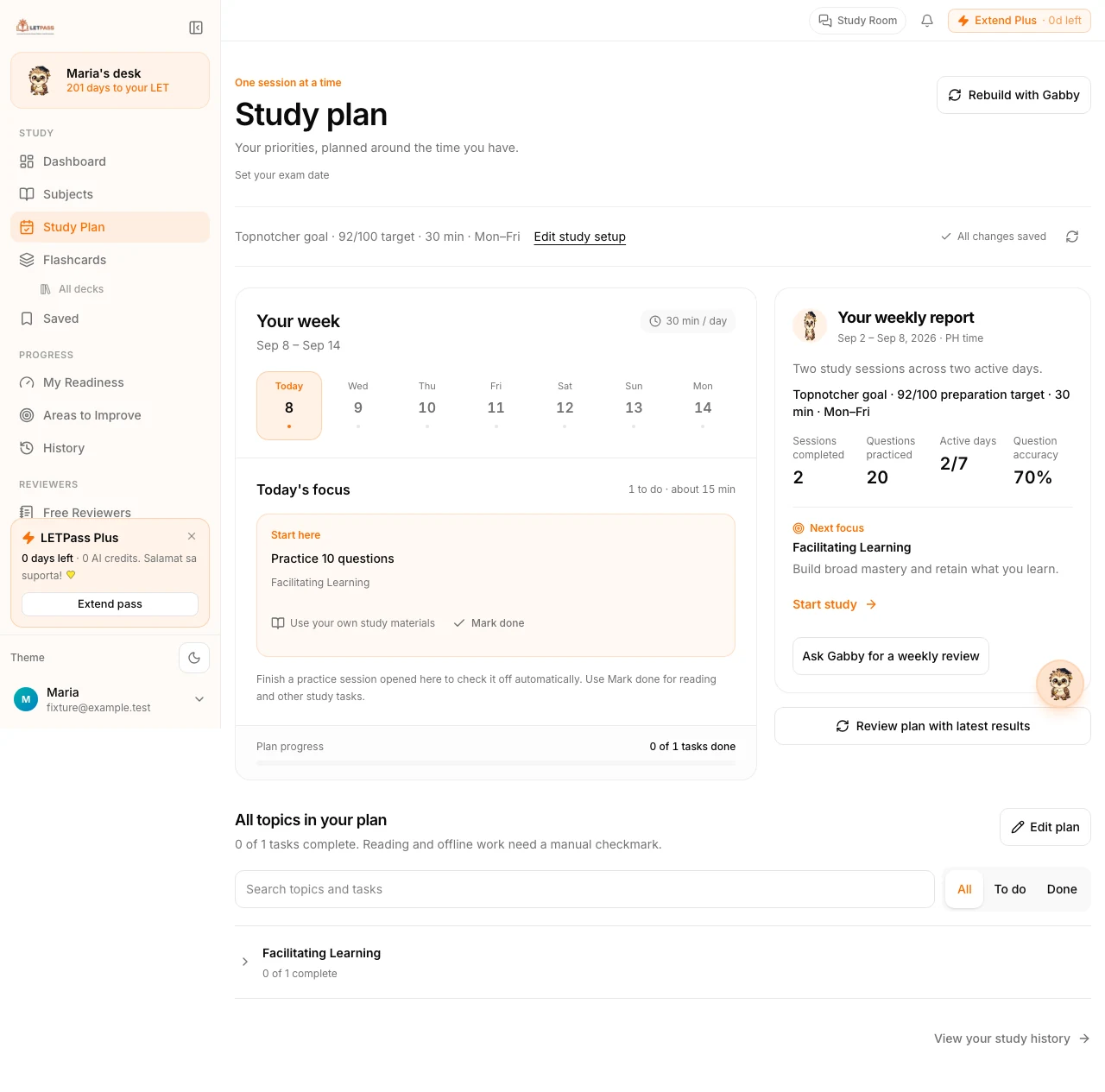
Carry the learning into a workable week.
A diagnostic is useful when it changes what happens next. Its findings feed the study plan, so the learner can begin with relevant topics instead of setting everything up again.
The plan brings available study time, practice tasks, and a weekly report together. An existing plan survives a repeated diagnostic; rebuilding it is a deliberate choice.
The public experience
Make the product easier to understand before signing up.
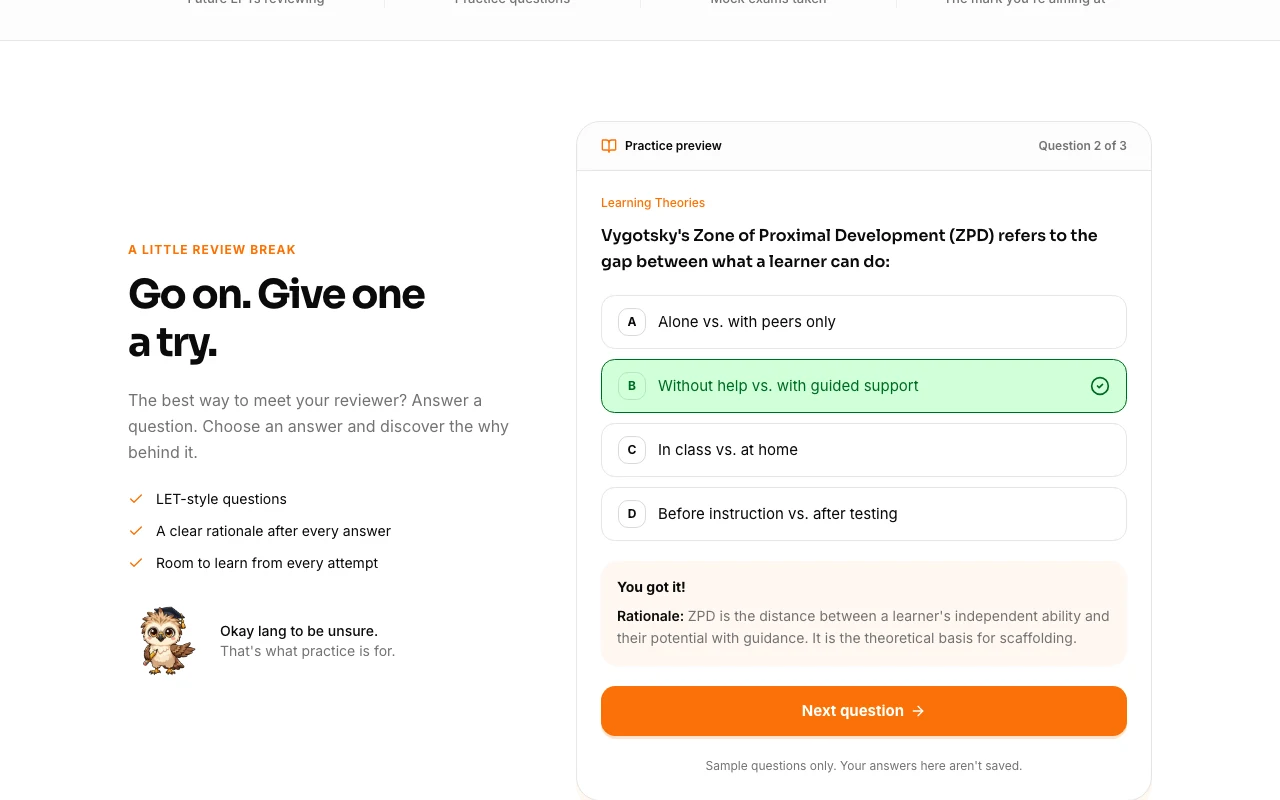
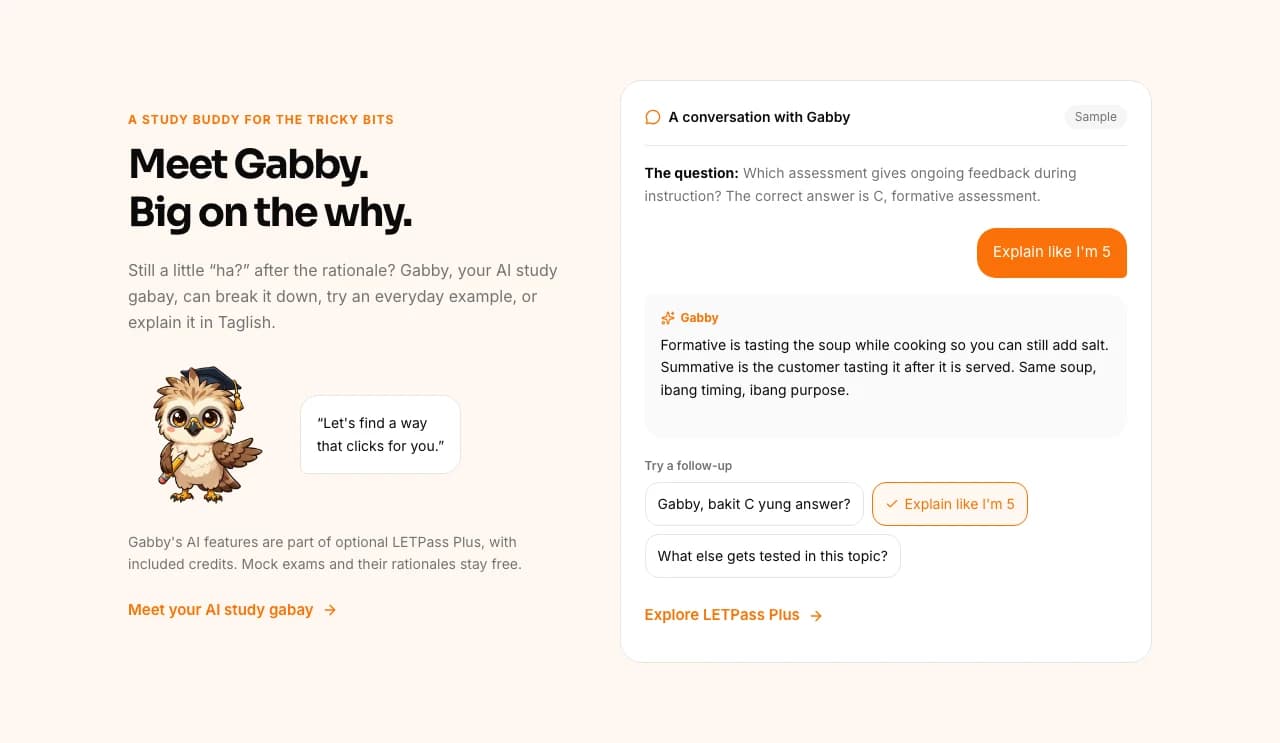
The refreshed website gives visitors a small, concrete experience of the product. A question preview shows the answer-and-explanation loop; a labelled Gabby example introduces contextual help.
Try the idea through a question.
Give the guide a clear role.
The decisions behind the build.
Personalisation should change the next step.
Exam track, preparation goals, available time, and practice history inform the experience. I keep those choices connected to the dashboard and plan, with a way to edit them as a learner’s situation changes.
A score needs context.
An early diagnostic and ongoing practice progress describe different amounts of evidence. The interface needs to explain that difference. Preparation targets and practice indicators guide review; they are not predictions of an official LET result.
Content and reliability need their own work.
The broader build has included a reference-backed item-writing process using Bloom’s Taxonomy, decisions about pricing and packaging, and resolving a production incident involving Supabase Disk IO. Question quality, access, and reliability remain part of operating the product after a screen is finished.
What the work demonstrates.
Product evidence
These are application captures from the September 2026 implementation, not design concepts. The dashboard, report, and plan use fictional learner data; the public previews are labelled samples. They show the working interface, not measured learning outcomes or aggregate product traction.
My responsibility
This is founder work. I shape the learner experience, build the application, and work through its ongoing operation. The product continues to evolve across practice, content quality, planning, and contextual help.
What I take from it
My view is that useful products connect the steps people already need to take, make the information understandable, and respect the work they have saved. Those principles inform my client projects; LETPass does not predict their results.
Let’s build something useful
Working through a product challenge?
If you have an idea, an awkward workflow, or an experience that needs a clearer direction, let’s talk it through.