LETPass Class / Own product
A class record built around the teacher.
An evolving classroom workspace for attendance, scores, and reports. Built to start with the records a teacher already has.
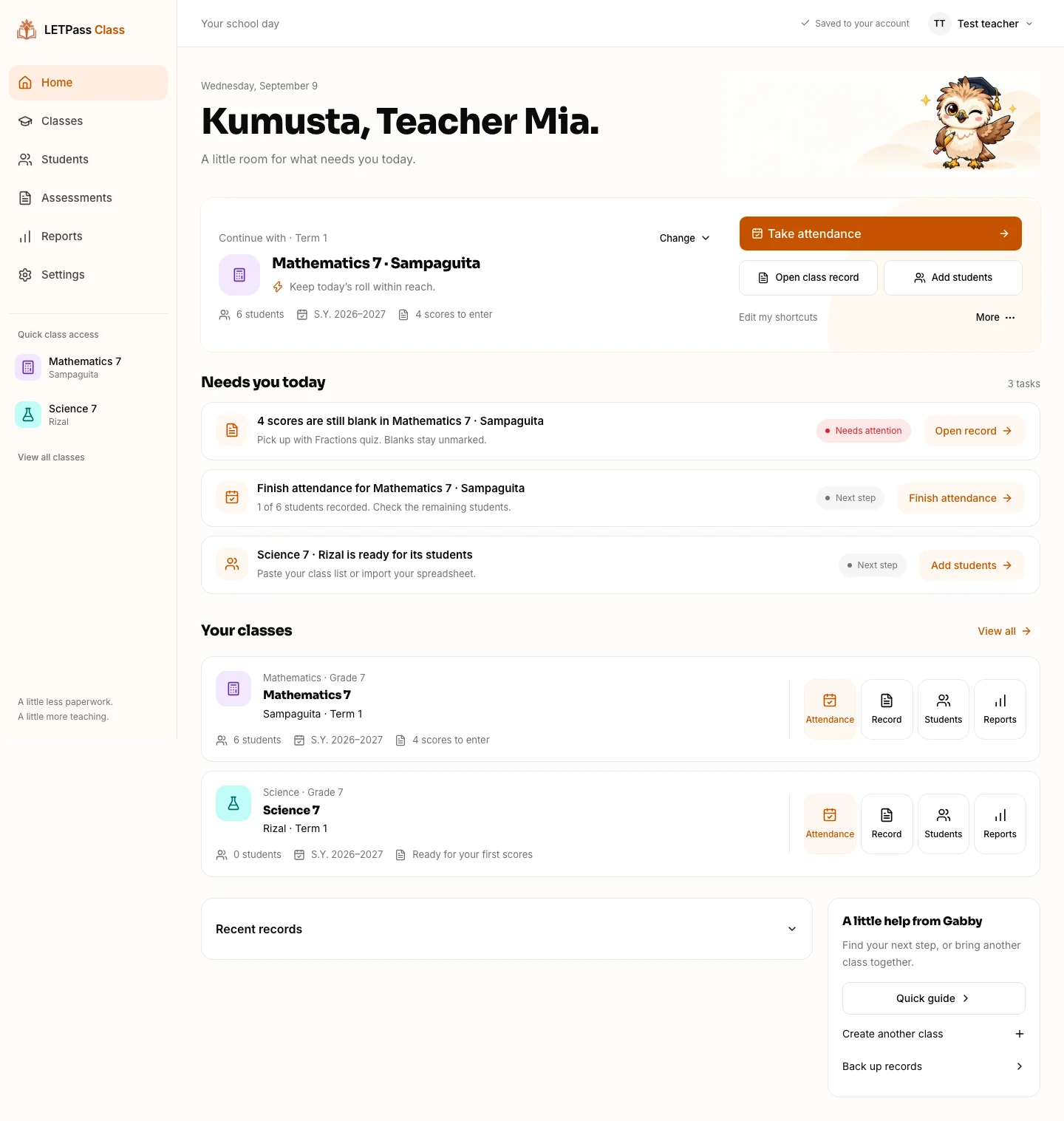
Start with the work already on the teacher’s desk.
A teacher’s day involves keeping class lists current, recording attendance, entering scores, and preparing reports. When those records live in separate spreadsheets or on paper, each next task can mean finding and checking the information again.
LETPass Class grew from a focused product decision: make the class record useful first. A teacher can organise their own classes without waiting for a whole school to adopt a system or for students to create accounts.
LETPass helps aspiring teachers prepare for their licensure exam. Class is a separate product for managing classroom work. I’m building its product experience and the application behind it.
The starting point is a familiar task, with a clearer way to get it done.
One record. A useful view for the task.
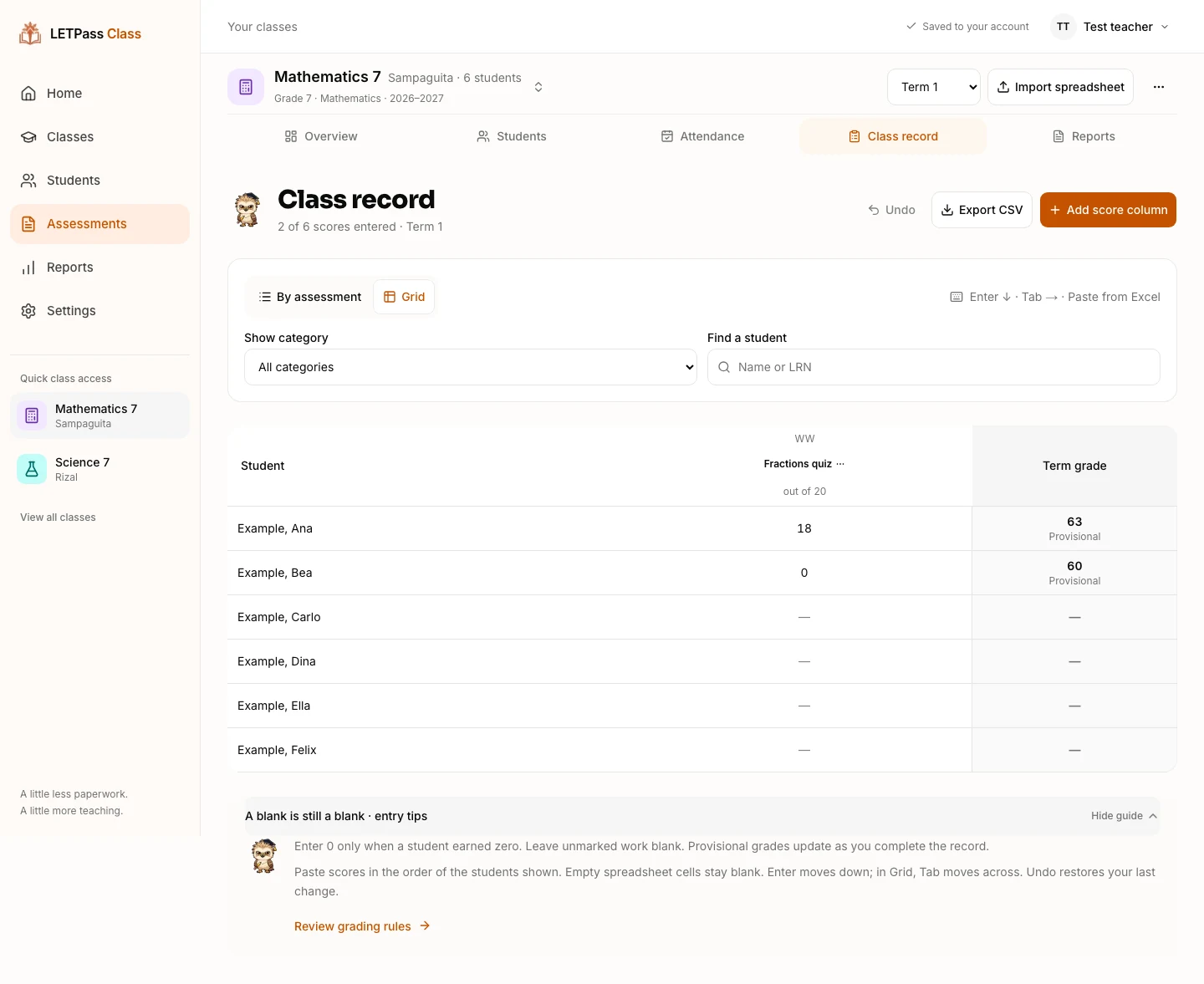
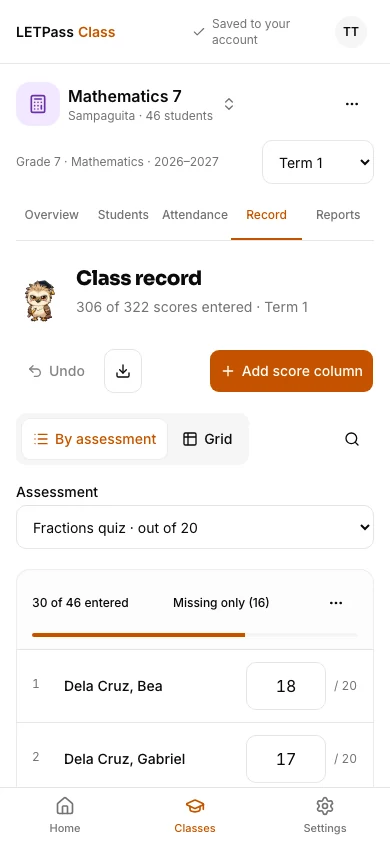
On desktop, the grid keeps the class in view. On a phone, teachers can choose an assessment and work down the score list. Each view works with the same underlying record.
Small distinctions that deserve careful handling.
A blank score is different from a zero.
Unmarked work stays blank. Zero is a score a teacher deliberately enters. That distinction carries through entry, spreadsheet imports, and provisional grade calculations, so missing work does not silently become a result.
Saving needs to be understandable.
The workspace distinguishes changes waiting to save from records saved to the teacher’s account. The interface needs to make the state of the work clear, particularly around a weak connection.
The home should help someone pick up a task.
Class shortcuts, unfinished attendance, and missing scores shape the teacher home. Saved preferences keep relevant actions close; Gabby’s guidance helps explain the next step without taking over the workspace.
From spreadsheet to workspace
Bring the existing records. Review what comes with them.
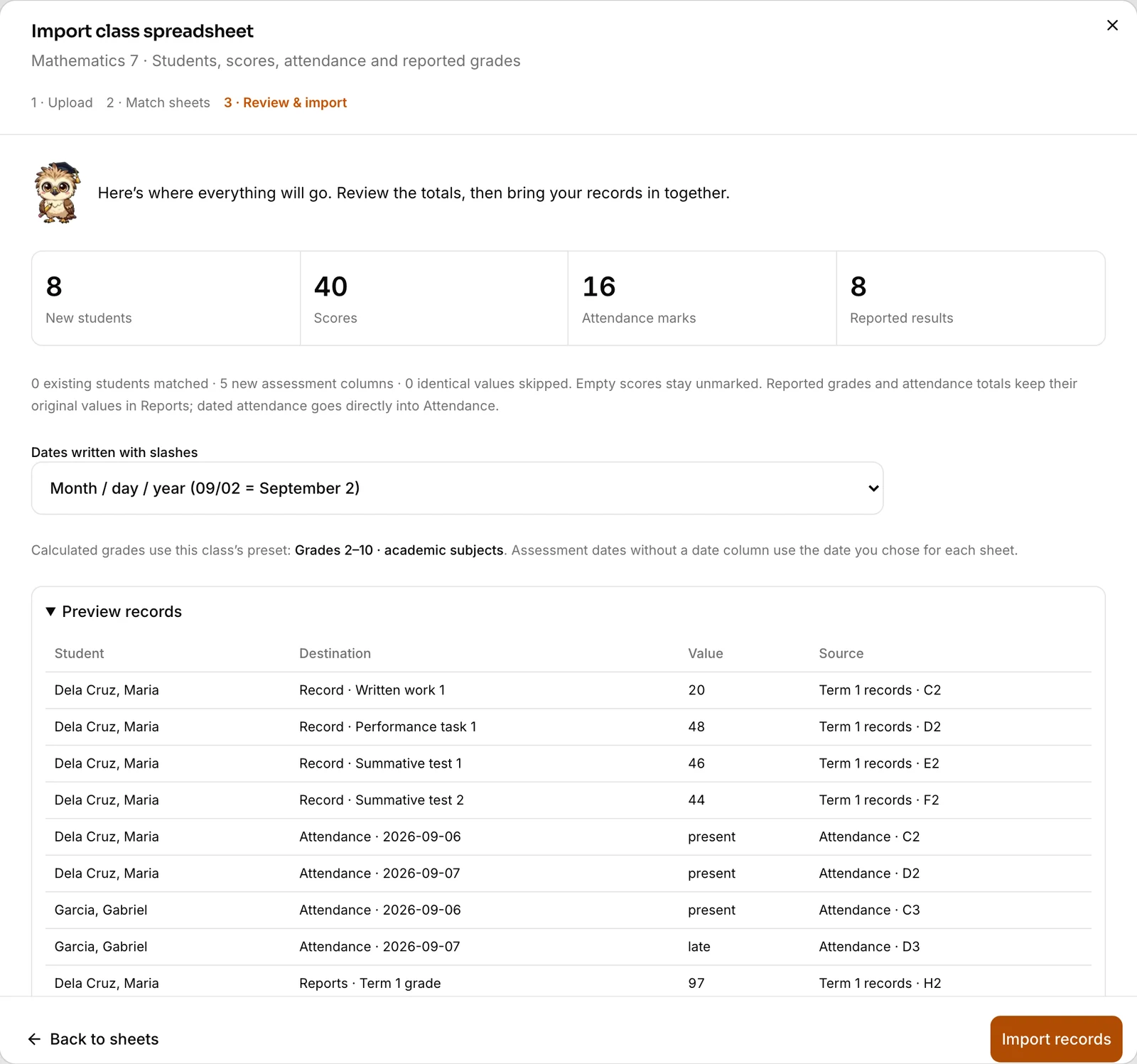
Starting again would ask too much. The import flow lets a teacher review students, score columns, attendance dates, and potential conflicts before committing a workbook’s records.
Original grade summaries stay separate from grades calculated inside Class. Teachers can see where a value came from while building a more complete record.
Working software, with more to learn.
What is implemented
Teacher accounts, class and learner records, attendance, score entry, grading presets, reports, and reviewed spreadsheet imports. The captures on this page come from the implemented application, using fictional classroom records.
What continues to evolve
The product is in active development. I’m refining setup, guidance, and the everyday classroom workflow. These screens demonstrate the implementation; they do not establish school adoption or measured time savings.
What informs my other work
My view is that a useful application should fit an existing routine, make its data understandable, and give people control over consequential changes. Those choices also matter in customer portals and internal business tools.

Let’s build something useful
A workflow that deserves a better tool?
Tell me how the work happens today and where it gets difficult. We can work out what a useful first version could look like.